

AI for science is here. 2026 is the year AI for science came center stage with major announcements rapidly increasing in frequency and excitement. It’s redefining what the future state of human biology and our world as we know it could look like and opening the door to a new era where big tech collaborations are laying needed foundations, unexpected companies are taking creative approaches, and individual people have increased access to bring control of their life into their own hands.
2 Major Launches This Week
This week Anthropic launched Claude Science, a platform designed for AI driven science with 60+ databases integrated. Also OpenAI introduced GeneBench-Pro, the leading benchmark for biology.
Both platform and benchmark driven approaches are needed. Luckily the leading AI companies are driving both fronts forward.

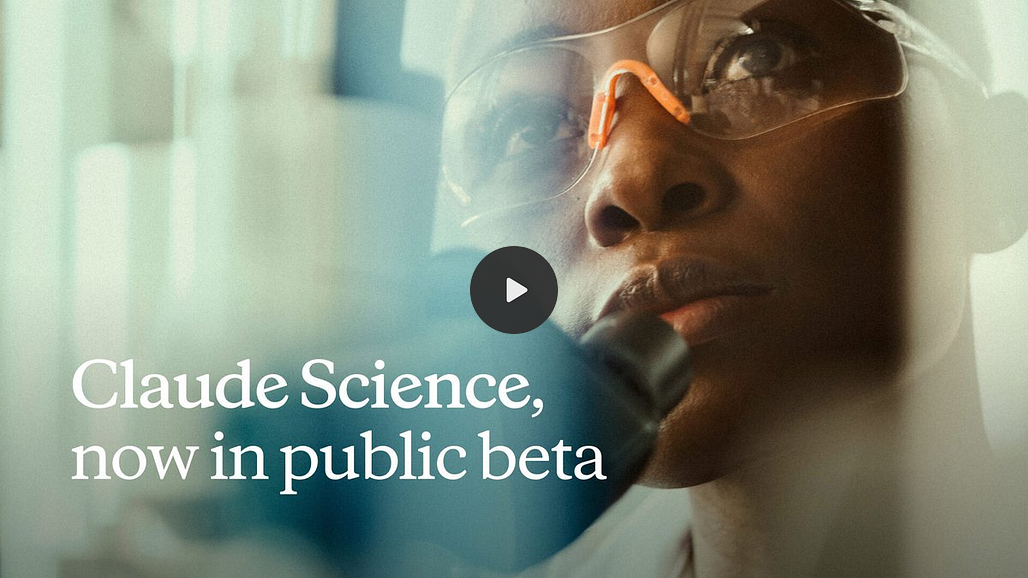


Anthropic also made an unexpected announcement: they are expanding into running pre-clinical drug programs in neglected diseases (aka they are a biotech company now too). This sparked mixed reactions ranging from excited support to cautious warning for scientists using Anthropic’s models regarding sharing their data with a potential competitor. Claude Science leaders have pointed to their focus on neglected diseases as reassurance that they aren’t a competitor. As more AI companies continue to expand into other domains, new norms for data collaborations will arise muting these concerns and enable new opportunities for users that weren’t available before.
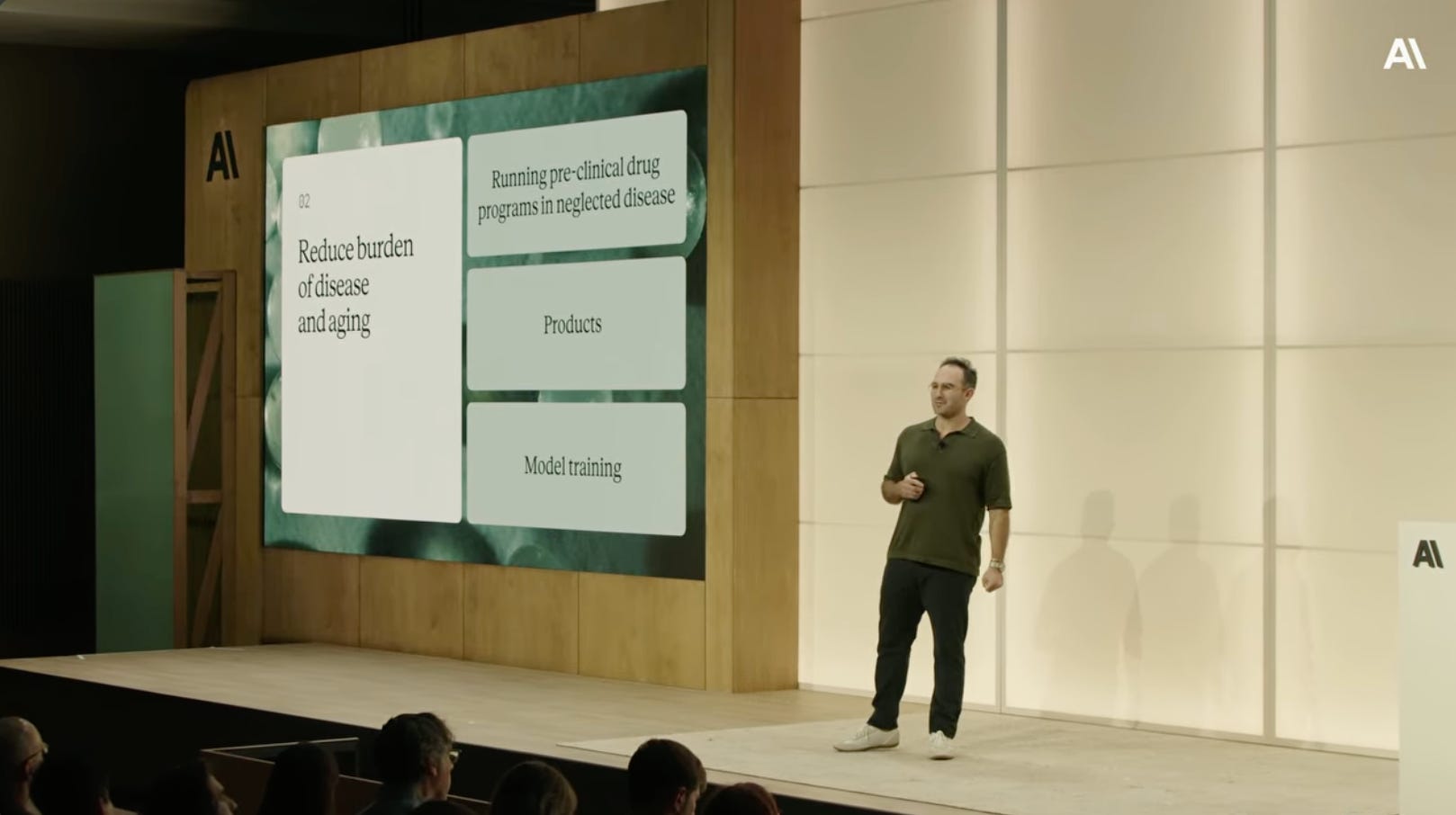
Looking forward we will likely see well resourced (massive funding rounds, brilliant technical staff, far reaching networks) AI companies continue to expand vertically in science and beyond.
Google’s Gemini for Science (suite), Antigravity (platform), ERA (empirical research assistance), Co-Scientist(hypotheses), AlphaEvolve (coding agent), AI for Science Impact Fund & Challenge (funding), AlphaFold (protein database)
Together AI’s EinsteinArena
Mechanisms to do this will look like:
Techbio acquisitions similar to how Coefficient Bio likely helped lay the foundation for Claude Science.
This can expand exit and aquihire opportunities for technical and platform science approaches beyond only pharma.
Failed biotech companies selling their data with surrounding context & metadata that has been missing from many model training datasets.
This can derisk more innovative biotech pursuits by creating entirely new business model opportunities and partial returns on failed pursuits.
In house at bats in wild and unexpected ways.
This looks like doing preclinical drug experiments, big pharma x big tech deep collaborations like Eli Lilly building a $1B AI lab with NVIDIA, and building entirely new technologies to understand the body like Midjourney Medical is doing with their ultrasound scanner (launched last month).

From another perspective, maybe none of this is really unexpected. Both Dario Amodei (Anthropic CEO) and David Holz (Midjourney CEO) expressed public interest in expanding into biology and medicine back in 2024 with Machines of Loving Grace and a tweet respectively.
Beyond them, many tech leaders, specifically fintech leaders, have also expressed an interest in advancing science with a focus on human health and have put their money where their moth is. This includes people like:
Vitalik Buterin, Ethereum co-founder and supportive scientific backer of funds (Balvi & Kanro), COVID efforts (1, 2, 3), & longevity (Methuselah, SENS, VitaDAO).
Brian Armstrong, Coinbase CEO turned cofounder and backer of ResearchHub (open peer review & funding) & NewLimit (raised $435M to reverse cellular aging)
Bryan Johnson, former CEO of Braintree (bought Venmo & sold to PayPal) now the face of longevity across Don’t Die & Blueprint
One factor worth noting is that each of these companies/leaders have the resources to freely discover without undue pressures of direct return or being forced to follow a “proven” path (i.e. they exited, have liquid capital or are self-funded with no investors). If this freedom to creatively pursue science leads to outsized impact, the future of impact investing could completely unravel. Now finding projects worth supporting early will become more important than ever. The new playbook for advancing science and impact focused domains is: succeed (and make money) in finance or tech then support moonshot ideas into reality.
Aleph Neuro is a good example of how a bootstrapped company is exploring completely uncharted domains (telepathy) through a more creative approach compared to competitors. That’s not to say they are doing it alone. Both Aleph & Midjourney use Butterfly Network’s ultrasound technology to power their platforms.

Beyond companies and founders, we will also see more individuals take matters into their own hands. From curing their own or their pet’s cancer by sequencing a tumor to more preventative approaches by sequencing their own genome to look at genetic markers for disease. As these technologies become increasingly available this will become accessible to all people.


Arguably the biggest advancement AI has made to date is that companies and people are realizing and fully embodying that you can just do things. AI for science is proof of that. If you’re a scientist or scientific company, that doesn’t mean you have to do it alone. There are resources to support becoming more AI native from Claude Science credits to OpenAI Foundation grants to entire programs like Reactorfield.
This is just the beginning of the future state of AI for science. What do you see coming next? If you’re building in AI for science, what bets are you making?
Know anyone who might have an interesting take? Would love to hear their thoughts!
In the upcoming weeks I’ll cover related topics like:
the scientific data gap causing models to waste billions of dollars
failures from decentralized science that AI could remedy for DeSci 2.0
mechanisms for more efficient impact support